
Clumping is one of the most common complaints when it comes to mascara performance. Whether it’s lashes sticking together, uneven application, or excess product buildup, these issues can significantly affect the user experience.
Many people assume the formula is the main cause, many beauty brands explain mascara clumping as a result of user habits, such as:
- Using dried or expired products
- Applying too many layers
- Using improper application techniques
- Not removing old mascara completely
While formulation and personal using habit certainly play a role, they are not the only factor.
In reality, mascara performance is the result of a complete system — including the brush, the wiper, and the tube design. Even a well-developed formula can perform poorly if the packaging components are not properly matched.
Understanding how these elements work together is essential for developing a mascara product that applies smoothly and consistently.
What Causes Mascara to Clump?
Mascara clumping typically occurs when too much product is deposited on the lashes at once, or when the product is not evenly distributed during application.
Several factors can contribute to this:
- Formula viscosity and drying speed
- Brush structure and material
- Wiper tightness and design
- Overall compatibility between components
Among these, packaging design is often underestimated, even though it directly controls how the formula is transferred from the tube to the lashes.
The Role of the Brush
The brush is the primary tool that transfers mascara from the tube to the lashes.
✔ Brush Density & Shape
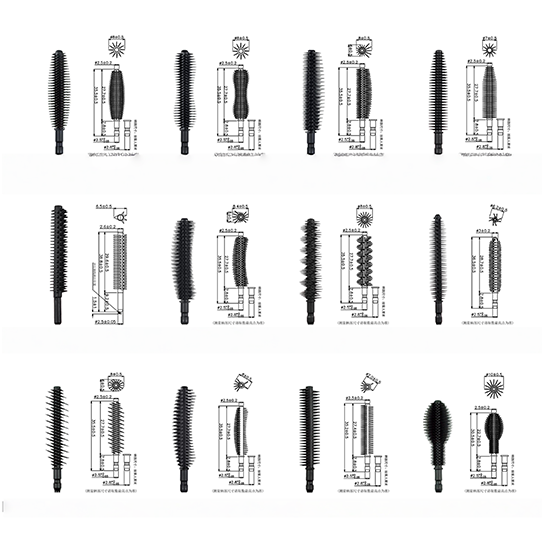
Different brush shapes create different effects:
- Dense, full brushes → higher product pickup, more volume
- Slim or tapered brushes → lighter, more controlled application
However, a brush that holds too much product can easily lead to clumping if the excess is not properly controlled.
✔ Brush Material
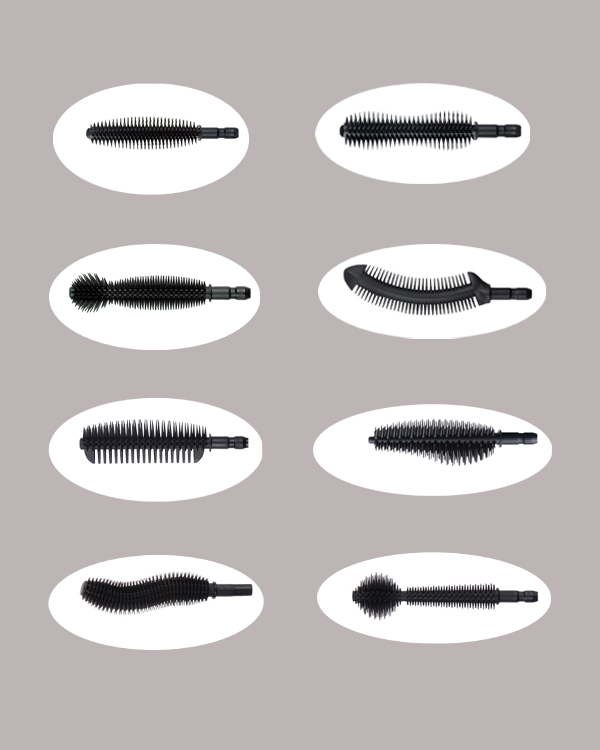
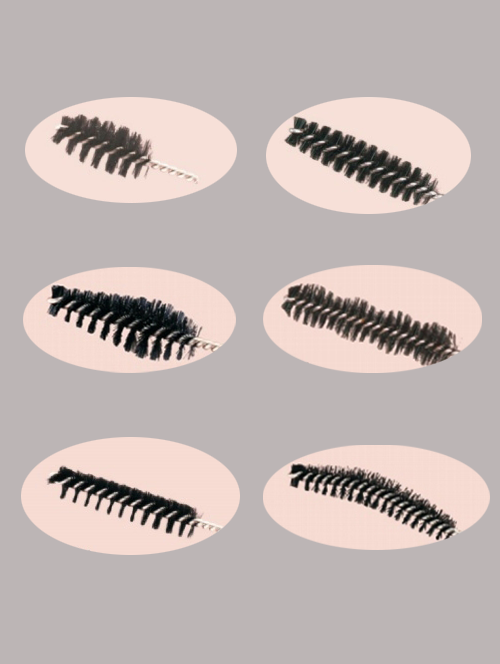
- Nylon brushes → stronger grip, can load more product
- Plastic brushes → smoother application, more defined separation
Each material interacts differently with the formula. For example, nylon brushes tend to hold more product between bristles, while plastic brushes rely more on surface contact.
The Wiper – The Key to Controlling Product Pickup
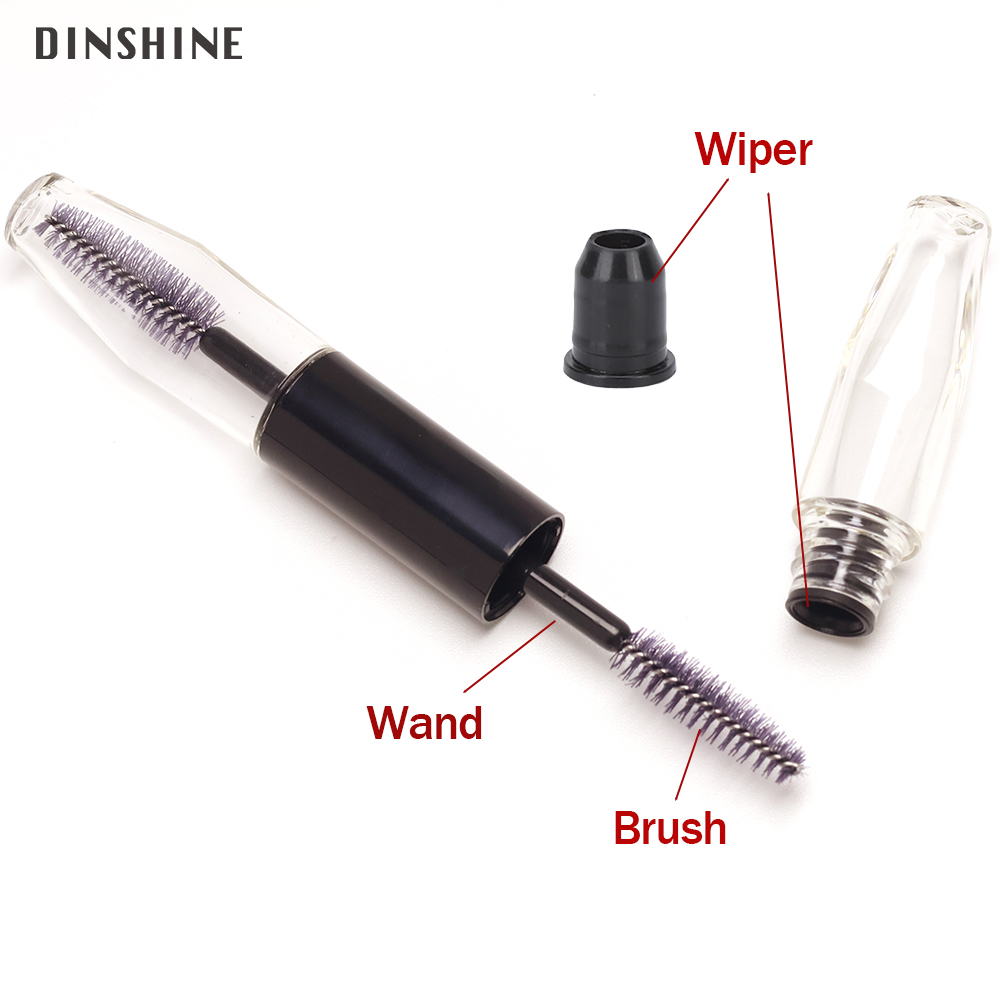
The wiper is a small but critical component inside the neck of the tube. Its role is to remove excess product from the brush as it is pulled out.
This is where a large part of clumping issues actually begins.
- A tight wiper removes more product → cleaner application
- A loose wiper removes less product → heavier application
If too much product remains on the brush, it is more likely to deposit unevenly on the lashes, leading to clumps.
Why Brush & Wiper Compatibility Matters
The brush and the wiper must work together as a system.
When the brush passes through the wiper, the interaction between their sizes and shapes determines how much product remains on the brush.
- Larger brush + tighter wiper → more product is scraped off → lighter pickup
- Smaller brush + looser wiper → less product is removed → heavier pickup
This balance is critical.
Even small differences in diameter can significantly change the amount of product applied, which directly impacts whether the mascara appears smooth or clumpy.
Other Packaging Factors That Contribute to Clumping
Clumping is not only about brush and wiper interaction. Other structural factors also play a role.
✔ Air Exposure & Sealing
If the tube is not properly sealed, air can enter and cause the formula to dry out over time. A drier formula tends to clump more easily during application.
✔ Neck & Wand Fit
If the wand does not fit tightly with the tube neck, it may affect sealing and consistency, leading to changes in product texture.
✔ Product Residue Build-Up
Over time, excess product can accumulate around the neck or wiper area. This can cause uneven distribution on the brush, contributing to clumping.
How to Reduce Mascara Clumping
To minimize clumping, it is important to consider both formula and packaging together:
- Match brush size with wiper diameter
- Choose brush structure based on formula viscosity
- Ensure proper sealing to maintain formula stability
- Test packaging as a complete system rather than separate parts
A well-balanced system allows for controlled product pickup and smoother application.
Conclusion
Mascara clumping is not simply a formulation issue.
It is the result of how the formula interacts with the packaging system — especially the relationship between the brush and the wiper.
By understanding these interactions, brands can develop mascara products that deliver consistent, clean, and high-quality performance.