Introduction: Material Choice Defines Your Mascara Packaging
Looking for actual packaging options? Explore our range of mascara tubes designed in both aluminum and plastic materials.
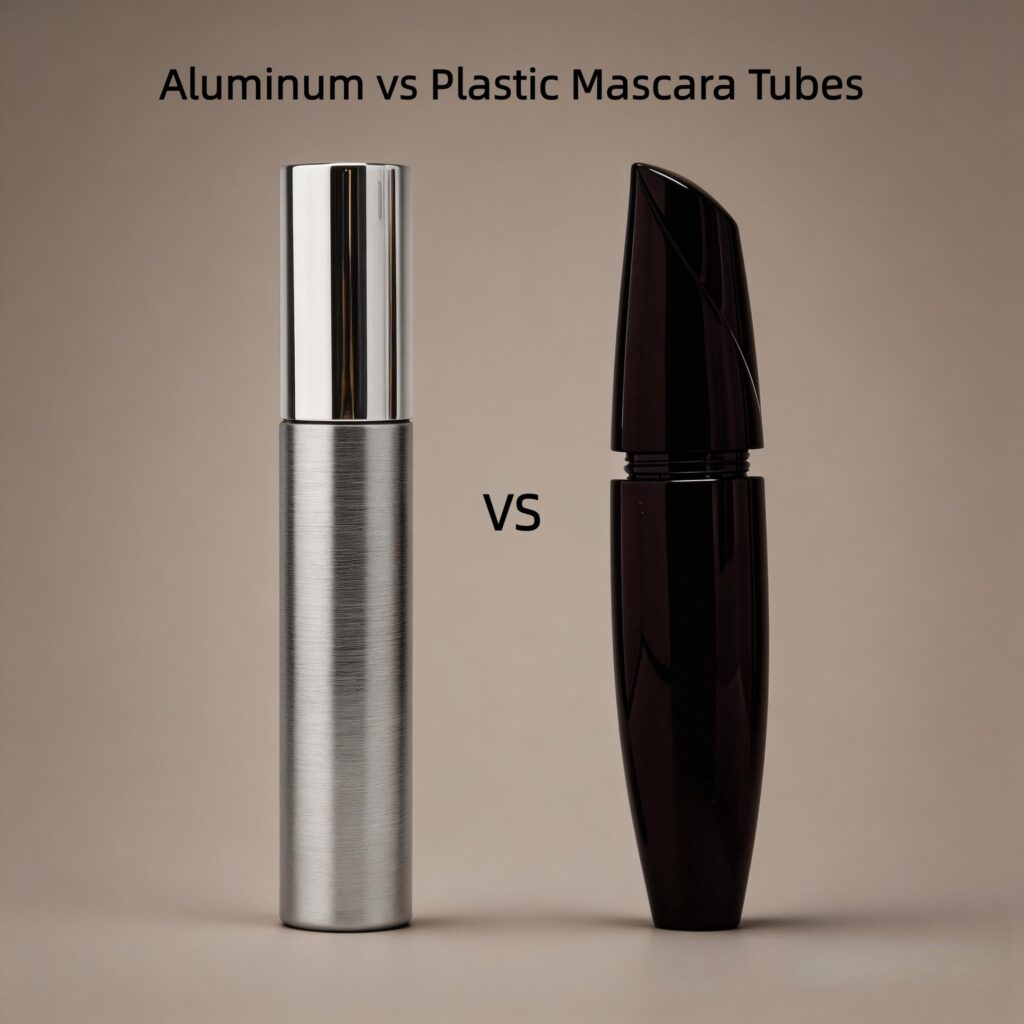
When developing a mascara product, choosing the right packaging material is more than a design decision—it directly impacts brand positioning, cost structure, production feasibility, and sustainability goals.
Among all options, aluminum and plastic mascara tubes are the two most commonly used materials. But which one is the better choice?
This guide breaks down the key differences to help you make an informed decision.
Aluminum Mascara Tubes
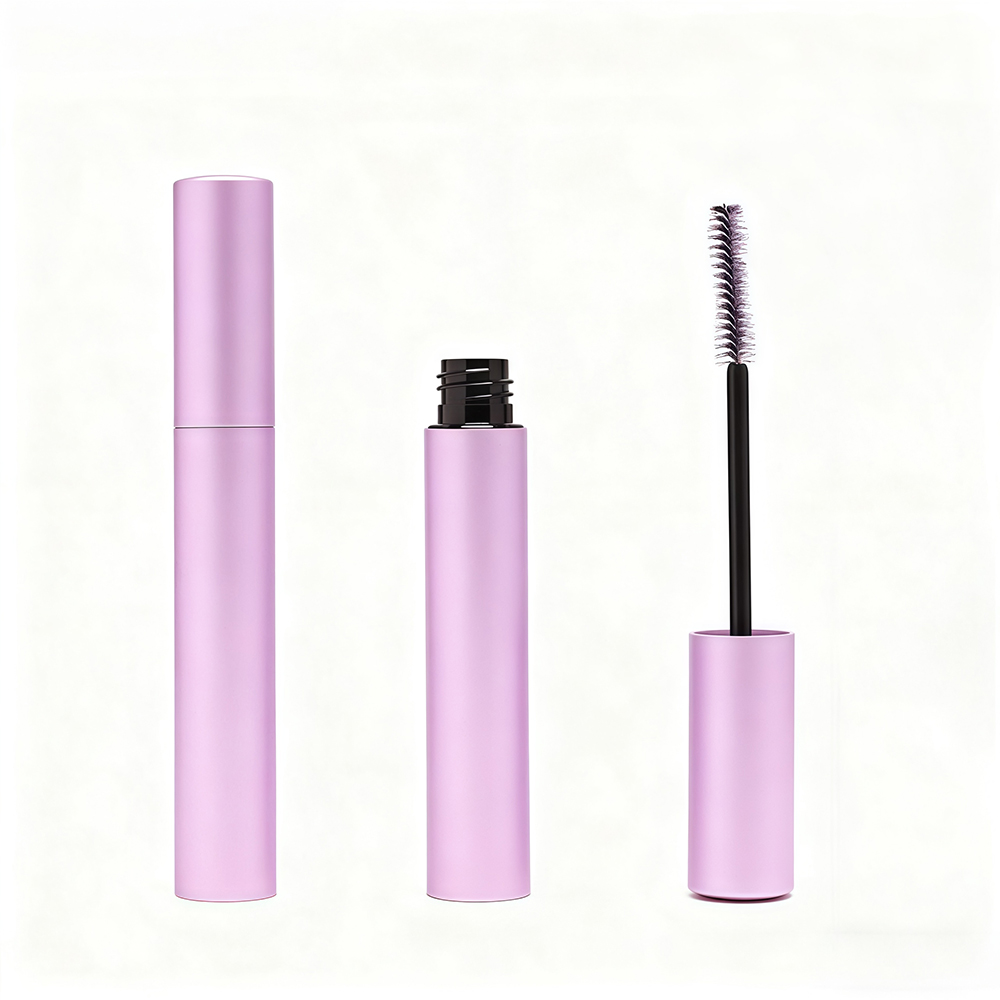
Aluminum mascara tubes are often associated with premium beauty brands due to their metallic finish and durability.
Advantages
- Premium appearance (Metallic texture enhances brand value and shelf appeal)
- High durability (Strong resistance to deformation and damage)
- Recyclability (Aluminum is widely recyclable and supports sustainability initiatives)
Considerations
- Higher cost (Material and processing costs are significantly higher than plastic)
- Limited design flexibility (Shapes and structures are more restricted compared to plastic)
- Weight (Heavier than plastic, affecting shipping cost)
Plastic Mascara Tubes
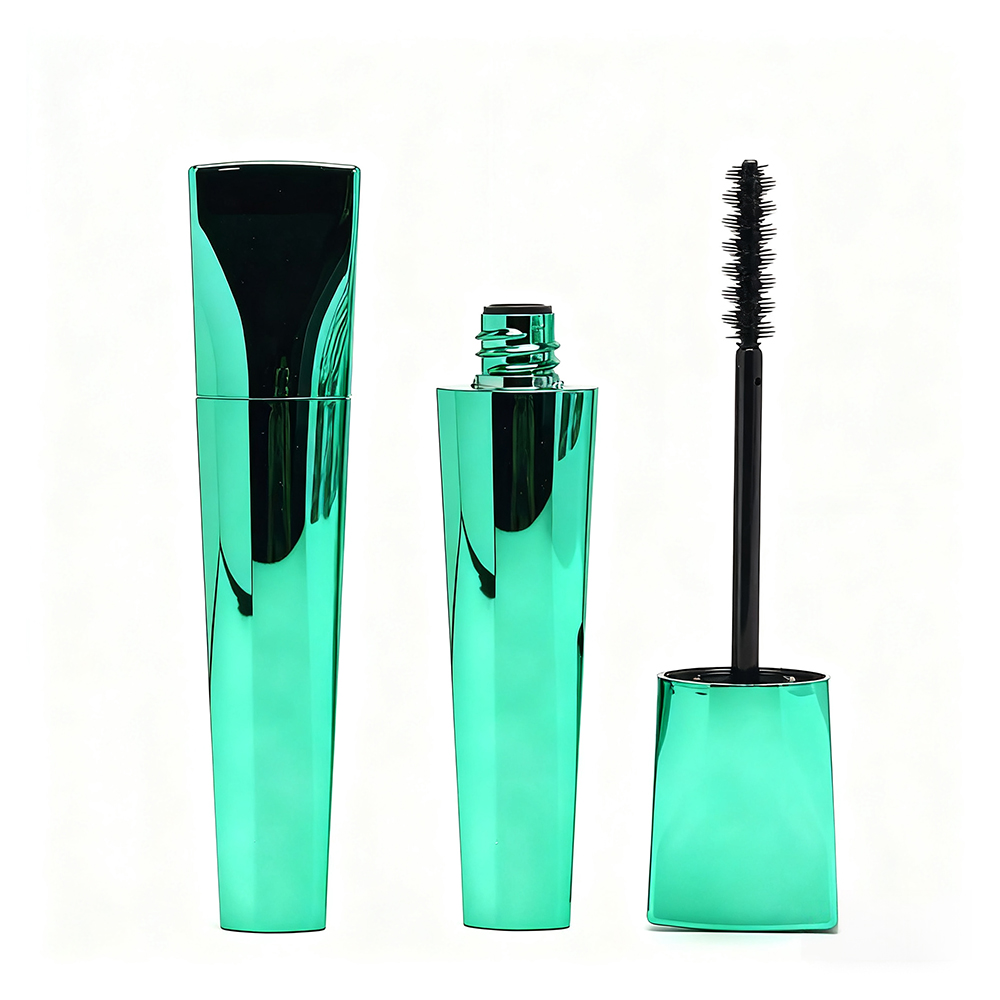
Plastic remains the most widely used material in mascara packaging due to its versatility and cost efficiency.
Advantages
- Cost-effective (Ideal for large-scale production)
- High design flexibility (Supports various shapes, finishes, and visual effects)
- Lightweight (Reduces transportation costs)
Considerations
- Perceived lower premium feel (depending on design)
- Environmental concerns (especially with certain materials like styrene-based plastics)
Browse our plastic mascara tube packaging solutions to see available shapes, materials, and customization options.
Material Options in Plastic Mascara Tubes
Different plastics offer different advantages:
ABS / AS
- Most commonly used materials in mascara packaging
- Easy to manufacture with high consistency
- Cost-efficient for large-scale production
ABS/AS remains the mainstream choice in the market, offering the best balance between performance, cost, and production efficiency.
PETG
- Typically used in thick-wall designs, providing a more solid and premium hand feel
- Can be fully transparent or customized with various surface finishes (frosted, tinted, coating, etc.)
- Enhances product appearance with a high-end, glass-like visual effect
Compared to ABS/AS, PETG offers a stronger sense of quality and visual differentiation. In addition, PETG is increasingly used as an alternative to styrene-based materials (AS/ABS), especially in markets affected by plastic reduction regulations. However, PETG has relatively lower processing stability, which makes large-scale production more challenging compared to traditional materials in many factories.
PP
- Lightweight with good chemical resistance
- Suitable for various formulations
While PP is not necessarily the lowest-cost material, it is still widely used as a regulation-friendly alternative, like PETG, PP helps reduce reliance on styrene-based plastics and supports evolving sustainability requirements.
Aluminum vs Plastic: Key Comparison
| Feature | Aluminum Tube | Plastic Tube |
|---|---|---|
| Appearance | Premium, metallic | Flexible, customizable |
| Cost | High | Low to medium |
| Weight | Heavy | Lightweight |
| Design Flexibility | Limited | High |
| Production | More complex | Mature & scalable |
| Sustainability | Recyclable | Depends on material |
Which One Should You Choose?
Choose Aluminum If:
- Your brand targets the premium or luxury segment
- You want strong visual differentiation
- Budget allows for higher packaging cost
Choose Plastic If:
- You need cost efficiency for mass production
- You require flexible design options
- You want faster development and scalability
Beyond Material: Why Compatibility Still Matters
Regardless of material, mascara packaging performance depends on:
- Brush compatibility
- Wiper system design
- Sealing structure
Learn more about different brush types in our Mascara Brush Options & Compatibility Guide.
A well-designed system ensures:
- Smooth application
- Controlled product pickup
- Leak-proof performance
Our Solution at DINSHINE PACKAGING
We offer both aluminum and plastic mascara tubes, combined with:
- Custom brush development
- Compatibility matching (brush + tube + wiper)
- OEM & ODM services
We help brands create packaging that is not only visually appealing, but also functional, reliable, and production-ready.
Conclusion
There is no one-size-fits-all answer.
- Aluminum delivers premium positioning and sustainability appeal
- Plastic offers flexibility, efficiency, and scalability
The best choice depends on your brand strategy, budget, and market positioning.
Contact Us
Ready to develop your mascara packaging?
Explore our full range of mascara tube packaging solutions or contact us for customization support.